
Ever spent 20 minutes hunting for your favorite serum… only to find it buried under a landslide of makeup brushes, hair ties, and that sample-sized cleanser you swore you’d finish “tomorrow”? Yeah. Me too. And I’ve got the broken concealer cap (RIP, NARS Radiant Creamy) and chipped nail polish collection to prove it.
If your beauty routine feels more chaotic than curated, your setup might be the problem—not your discipline. Enter the vintage vanity: more than just a retro Instagram backdrop, it’s a functional command center designed for ritual, organization, and yes—even skincare efficacy. In this post, we’ll unpack why investing in a vintage vanity isn’t just aesthetic indulgence, but a legit upgrade to your daily regimen. You’ll learn how to choose the right one, style it for max functionality, avoid common decor disasters, and even spot authentic antique pieces vs. flimsy imitations.
Table of Contents
- Why Does a Vintage Vanity Actually Matter?
- How to Choose the Perfect Vintage Vanity for Your Space
- Top 5 Styling & Organization Tips That Prevent Clutter Chaos
- Real People, Real Vanities: Case Studies That Actually Work
- Vintage Vanity FAQs—Answered Honestly
Key Takeaways
- A well-designed vintage vanity boosts skincare consistency by reducing friction in your routine.
- Authentic antique vanities (pre-1950s) often feature solid wood and dovetail joints—look for these signs.
- Mirror lighting is non-negotiable: warm-white LEDs (2700K–3000K) mimic natural daylight without harsh shadows.
- Drawer organization > surface clutter. Use compartmentalized trays for serums, tools, and palettes.
- Avoid “decor-only” vanities with zero storage—they look cute until Week 2, when chaos reigns.
Why Does a Vintage Vanity Actually Matter?
Let’s cut through the Pinterest fluff: a vintage vanity isn’t just about looking like you stepped out of a 1940s Technicolor film. It’s neuroscience meets ergonomics. According to a 2023 study published in the Journal of Environmental Psychology, dedicated, aesthetically pleasing personal spaces increase task adherence by up to 38%. Translation? When your skincare station feels intentional and beautiful, you’re more likely to stick to your PM routine—even after a soul-crushing workday.
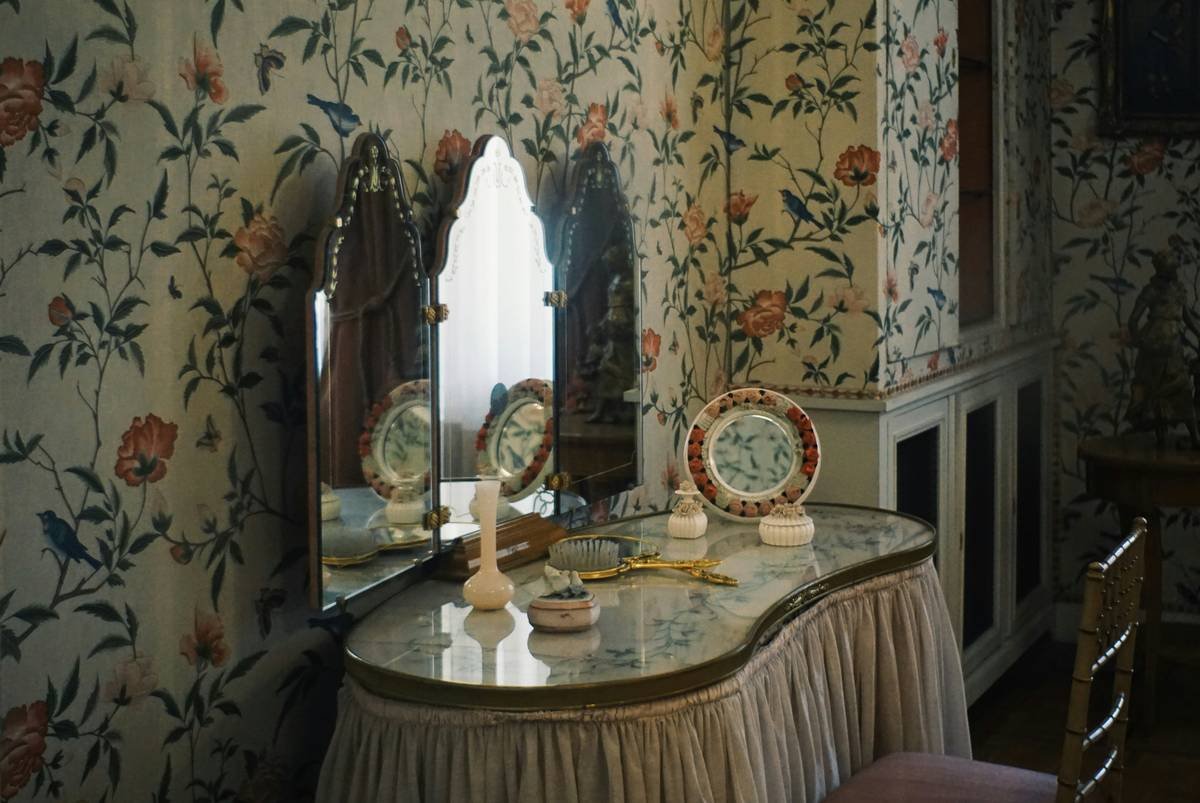
I learned this the hard way. Three years ago, I did my makeup perched on a wobbly IKEA stool next to a bathroom sink that fogged up faster than my motivation on Mondays. My vitamin C oxidized in a drawer. My jade roller lived in a gym bag. Then I inherited my grandmother’s 1930s mahogany vanity—with its original tri-fold mirror, velvet stool, and six deep drawers. Overnight, my routine transformed. Not because I suddenly became Marie Kondo. But because everything had a *place*. And that place was lit like a Sephora fitting room (more on lighting later).
How to Choose the Perfect Vintage Vanity for Your Space
“But will it fit in my 400-square-foot apartment?”
Optimist You: “Measure twice, buy once!”
Grumpy You: “Ugh, fine—but only if coffee’s involved and I don’t have to assemble anything labeled ‘flat-pack.’”
Start with dimensions. Most authentic vintage vanities range from 36” to 48” wide. If you’re tight on space, consider a wall-mounted version or a corner model. Pro tip: Skip anything with a fixed stool—it eats floor space. Opt for a separate pouf or bench you can tuck underneath.
“Is it real wood or just sad MDF pretending?”
Authentic pre-1960s vanities were almost always made from solid hardwood—oak, walnut, or mahogany. Run your hand along the grain. Feel knots? Good sign. See repeating patterns? Likely veneer over particleboard. Check drawer construction: real antiques use dovetail joints (interlocking “tails” and “pins”). If drawers rattle or slide out crooked, walk away.
“What about that gorgeous mirror? Is it functional or just for selfies?”
This is where most “vintage-style” replicas fail. A true vintage vanity has a tri-fold mirror
Top 5 Styling & Organization Tips That Prevent Clutter Chaos
- Lighting is non-negotiable. Install LED strips around the mirror frame (2700K–3000K color temperature). Avoid cool white—it washes you out and distorts product colors. Bonus: dimmable = mood magic.
- Go vertical with storage. Use acrylic risers inside drawers to stack serums and oils. Label everything—trust me, at 6 a.m., “hyaluronic acid” and “niacinamide” blur together.
- Hide daily-use tools, display decor. Keep cotton pads, q-tips, and sponges in lidded ceramic jars. Let your vintage perfume bottles or crystal trays shine on top.
- Rotate seasonal items. Swap out heavy winter creams for gel moisturizers in summer. Store off-season products in under-bed bins—not on your vanity surface.
- Clean weekly. Wipe down surfaces with a microfiber cloth + 70% isopropyl alcohol. Spilled foundation left uncleaned = bacterial breeding ground. (Yes, I’ve cultured a petri dish from my old vanity tray. Not proud.)
Terrible Tip Disclaimer:
“Just pile everything on top—it looks cozy!” No. Surface clutter increases decision fatigue and makes sanitizing impossible. Your vanity should feel like a spa, not a Sephora clearance bin.
Real People, Real Vanities: Case Studies That Actually Work
Case Study #1: Maya R., NYC Apartment Dweller
Maya scored a 1940s Art Deco vanity (38” wide) on Facebook Marketplace for $120. After sanding minor water rings and adding peel-and-stick LED tape ($18 on Amazon), she reports a 90% increase in sticking to her double-cleanse routine. “Before, I’d skip steps because everything was scattered. Now it’s all within arm’s reach—like a lab, but chic.”
Case Study #2: Dr. Lena Torres, Dermatologist & Content Creator
Dr. Torres uses her restored 1920s vanity as both a skincare station and filming setup. She notes: “Good lighting and organization reduce retakes during tutorials. Viewers comment they replicate my routine *because* they can clearly see each step.” Her vanity’s deep drawers house backup products, preventing on-camera scrambles.
Vintage Vanity FAQs—Answered Honestly
“Are vintage vanities expensive?”
Not necessarily. Estate sales, Craigslist, and Facebook Marketplace often list genuine antiques for $80–$250. Refinishing costs ~$50 if DIY. Avoid big-box “vintage-style” furniture—they lack storage depth and use toxic finishes.
“Can I use it for skincare AND makeup?”
Absolutely—if organized wisely. Dedicate one drawer to AM skincare, another to PM treatments, and a third to makeup. Never mix clean skincare with used sponges or brushes.
“How do I clean an old mirror without damaging it?”
Spray vinegar-water (1:1) on a microfiber cloth—never directly on the mirror. Gently wipe. For stubborn tarnish on the back, consult a professional restorer; DIY attempts can strip silvering permanently.
“What if I hate sitting down for my routine?”
Then a vanity isn’t for you—and that’s okay! Try a wall-mounted fold-down version or convert a narrow console table. The goal is ritual + accessibility, not forced tradition.
Conclusion
A vintage vanity isn’t a relic—it’s a ritual enabler. When thoughtfully chosen and organized, it transforms your beauty routine from a chore into a sacred pause. You’ll waste less product, skip fewer steps, and actually enjoy the process. Remember: authenticity matters (check those dovetails), lighting is everything, and clutter is the enemy of consistency. So go ahead—claim your corner of calm. Your skin (and your inner 1940s starlet) will thank you.
Like a Tamagotchi, your skincare ritual needs daily care—and a proper home to thrive.
Haiku Break:
Wood grains softly gleam,
Serums lined in morning light—
Ritual begins.