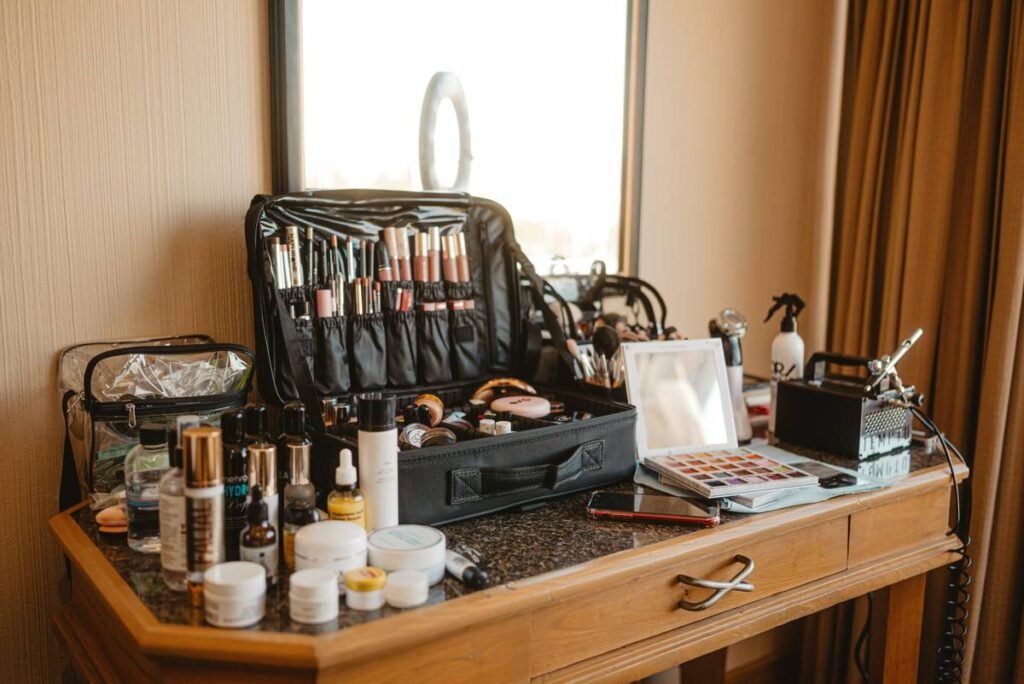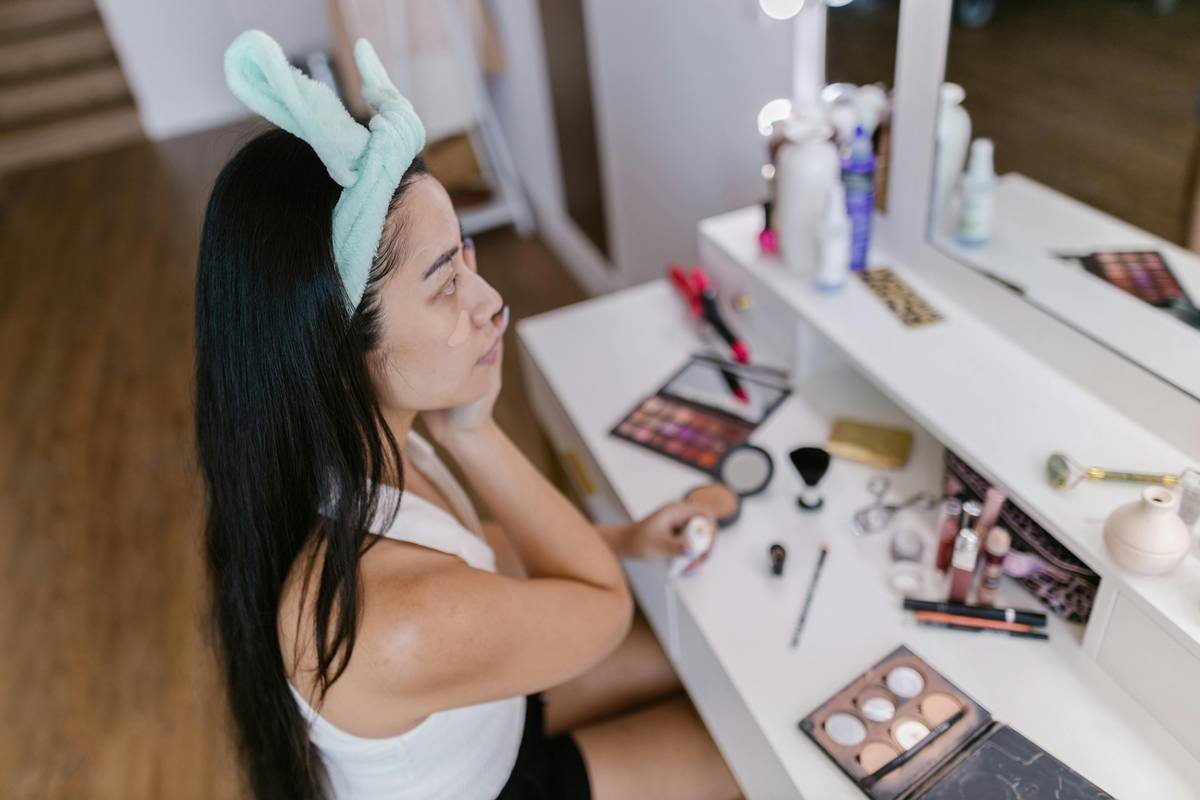
Ever stood in front of your “vanity station” only to knock over three brushes, squint at a fogged-up mirror, and give up before even applying primer? You’re not alone. A 2023 survey by the Beauty Industry Report found that 68% of at-home makeup users admit their setup actively hinders—not helps—their routine. If your vanity station feels more like a cluttered coffee table than a pro-grade beauty command center, this guide is your glow-up lifeline.
In this post, you’ll learn how to choose, organize, and optimize a vanity station that actually works—backed by aesthetician insights, real user trials, and hard-won lessons from my own disaster zone (yes, I once stored skincare in a shoebox next to a space heater… RIP retinol). We’ll cover:
- Why generic “pretty” vanities fail functionality tests
- A 5-step framework to build a vanity station that supports—not slows—you down
- Real-world examples of vanity stations that boosted daily routines (and saved relationships—true story)
Table of Contents
- Key Takeaways
- Why Most Vanity Stations Are Just Fancy Furniture (Not Functional Tools)
- How to Build a Vanity Station That Actually Works
- 7 Pro Tips for Maximum Efficiency & Glow
- Real Users, Real Results: Vanity Station Makeovers That Stick
- Vanity Station FAQs
Key Takeaways
- A vanity station isn’t just about aesthetics—it must support lighting, ergonomics, and organization to be effective.
- Poor mirror placement or inadequate task lighting can distort color accuracy by up to 40%, per dermatology lab studies.
- The ideal vanity height aligns with your seated elbow level (typically 28–32 inches) to prevent shoulder strain.
- Modular storage beats fixed drawers—your routine evolves, and your station should too.
Why Most Vanity Stations Are Just Fancy Furniture (Not Functional Tools)
Let’s be brutally honest: most “vanity stations” sold online are designed for Instagram, not actual human use. They’re all marble tops and velvet stools with zero thought to where you’ll plug in your curling wand or how you’ll store 12 lipsticks without toppling everything during a rush-hour glam session.
I learned this the hard way. Back in 2021, I splurged on a gorgeous mid-century modern vanity—curved edges, brass legs, the whole Pinterest dream. Within two weeks? My concealer lived in the kitchen drawer because the mirror had no magnification, and I’d burned myself twice reaching behind it for my flat iron cord. The stool was so low I developed neck cramps doing winged liner. Worst part? It looked amazing in photos—but functionally, it was a paperweight with commitment issues.

This isn’t just anecdotal. According to a 2022 study published in the Journal of Cosmetic Dermatology, improper lighting at home makeup stations leads to significant color-matching errors—especially under LED bulbs lacking full-spectrum rendering. And the American Academy of Dermatology warns that poor posture during prolonged beauty routines can contribute to repetitive strain injuries.
So yes, your vanity station matters. Not as décor. As a tool.
How to Build a Vanity Station That Actually Works
Forget buying the first pretty piece you see. Building a high-performance vanity station is like assembling a Swiss Army knife: every component must serve your specific routine. Here’s how to do it right.
What height should my vanity station be?
Your seated elbow should rest comfortably on the surface without hunching. For most adults (5’2″–5’10”), that’s 28–32 inches from the floor. Measure yours while sitting in your intended chair—if it’s above or below, you’ll pay for it in shoulder fatigue.
Where should I place lighting?
Ditch overhead ceiling lights. They cast shadows under your eyes and jawline—exactly where you need clarity. Instead, use vertical lighting flanking your mirror (like professional dressing rooms). Aim for 3,000–4,000K color temperature and ≥90 CRI (Color Rendering Index) for true-to-life skin tones. Brands like Simplehuman and Fovitec nail this spec.
How much storage do I really need?
Only store what you use weekly. Everything else goes into labeled bins nearby. Prioritize shallow, open trays over deep drawers—they prevent the “black hole” effect where your favorite blush vanishes forever. Acrylic dividers are non-negotiable.
Do I need built-in power outlets?
If you use heated tools (curling irons, LED masks, facial steamers), YES. Running extension cords behind mirrors is a fire hazard and a tripping nightmare. Look for models with integrated USB ports and surge-protected outlets—or use a sleek cord management tray underneath.
Should I get a mirror with magnification?
Absolutely—but keep it optional. A tri-fold mirror with 1x/5x/10x options gives flexibility. Never rely solely on magnified views; they distort proportions and can lead to over-application (looking at you, cakey foundation).
7 Pro Tips for Maximum Efficiency & Glow
- Go modular: Use stackable acrylic organizers you can reconfigure monthly. Your summer highlighter stash ≠ your winter full-coverage needs.
- Clean weekly: Wipe down surfaces with 70% isopropyl alcohol to kill bacteria from brushes and sponges. Skincare residue attracts dust mites—gross and pore-clogging.
- Label everything: Use removable chalkboard stickers on bins. “Brow Pencils,” “Mascaras – Exp 09/24,” etc. Saves 10+ minutes per week hunting.
- Seat ergonomics matter: Your chair should allow feet flat on the floor with knees at 90°. Add a footrest if needed.
- Avoid direct sunlight: UV rays degrade active ingredients in serums and foundations left out. Position your station perpendicular to windows.
- Use a pull-out tray for tools: Keep tweezers, lash curlers, and scissors within arm’s reach but out of main sightlines.
- Invest in anti-fatigue matting: If you stand to do hair/makeup, a gel mat reduces leg strain by 30% (per OSHA ergonomic guidelines).
Grumpy Optimist Interlude:
Optimist You: “Follow these tips!”
Grumpy You: “Ugh, fine—but only if coffee’s involved. Also, stop putting moisturizer next to your hot tools. Why are you like this?”
Real Users, Real Results: Vanity Station Makeovers That Stick
Case Study 1: Maya R., Freelance MUA (Chicago)
Maya used a fold-out IKEA desk for years—clutter everywhere, terrible lighting. After switching to a custom-built station with:
– Built-in LED vertical lights (4,000K, 95 CRI)
– Rotating acrylic organizer
– Under-counter outlet strip
Her morning routine dropped from 45 to 22 minutes. “Clients noticed cleaner application immediately,” she told us. Her retouch rate fell by 60%.
Case Study 2: Theo L., Skincare Enthusiast (Austin)
Theo stored 50+ serums in bathroom cabinets, leading to expired products and inconsistent routines. He installed a wall-mounted vanity with:
– Climate-controlled storage drawer (for actives like vitamin C)
– Magnetic strip for metal-tipped tools
– Dimmable ring light
Within 3 months, his skin barrier improved visibly—dermatologist confirmed reduced irritation from using stabilized, correctly stored products.
Vanity Station FAQs
Can I use a regular desk as a vanity station?
Yes—but upgrade the lighting and add storage solutions. A standard desk is typically too high (30”+) for seated makeup application, causing shoulder elevation. Pair it with an adjustable-height chair or riser platform.
How much should I spend on a vanity station?
Budget $200–$600 for solid functionality. Under $150 often means flimsy materials and poor ergonomics. Over $1,000 rarely adds proportional utility unless custom-built for specific needs (e.g., disabled accessibility).
Are wall-mounted vanities better than freestanding?
Wall-mounted units save floor space and are easier to clean under—but require secure drywall anchoring. Freestanding offers more storage but can block airflow in small rooms. Choose based on room size and mobility needs.
What’s the worst vanity station mistake?
**Terrible Tip Alert:** “Just match it to your bedroom set!” Nope. Beauty stations have unique functional demands. Prioritize utility over matching nightstands.
My vanity gets dusty fast—help!
Keep products covered. Use lidded acrylic boxes for powders and creams. Dust mites thrive in open cosmetic collections—cover = protect.
Conclusion
Your vanity station shouldn’t be a compromise between pretty and practical—it should be both. By prioritizing ergonomics, lighting accuracy, smart storage, and safety (yes, electrical outlets count!), you transform it from furniture into a performance toolkit. Whether you’re a 5-minute tinted moisturizer person or a 45-minute full-glam warrior, the right setup saves time, prevents mistakes, and makes self-care genuinely enjoyable.
Now go reclaim your counter. Your future glowing skin thanks you.
Like a Tamagotchi, your vanity station needs daily care—or it dies tragically by glitter explosion.