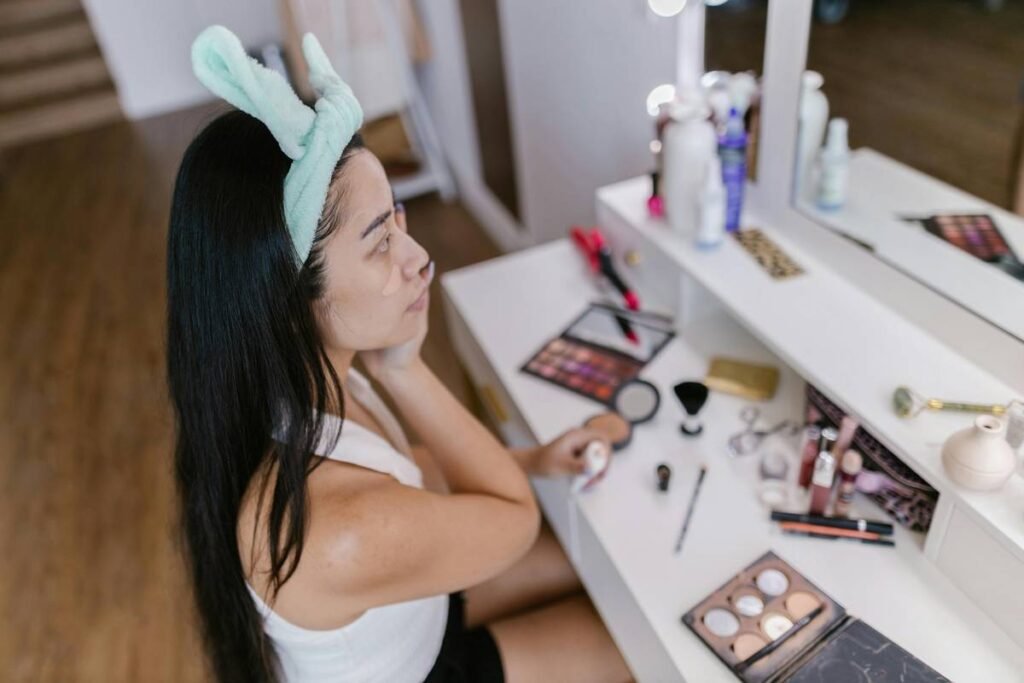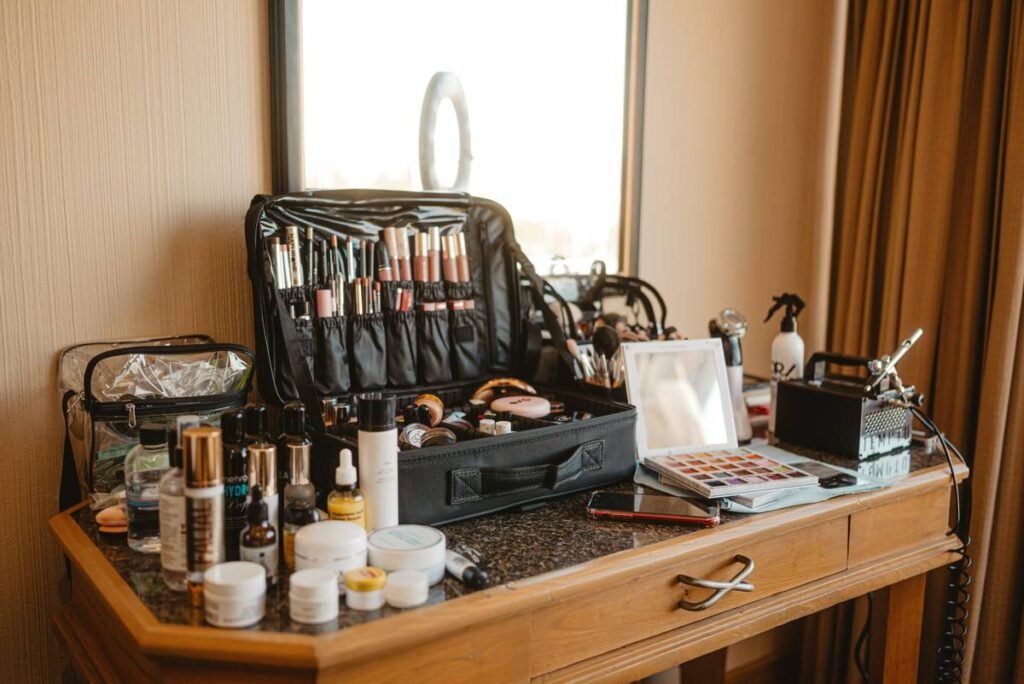
Ever stood in front of your “vanity” at 7 a.m., squinting under that jaundiced yellow bulb, trying to blend foundation like you’re defusing a bomb—only to walk outside and realize you look like a cinnamon roll dipped in ash? Yeah. That’s not bad lighting. That’s a bad vanity table.
If you’ve ever blamed your shaky eyeliner hand or uneven contour on “just having off days,” let me gently say: your setup might be gaslighting you. A true vanity table isn’t just a pretty piece of furniture. It’s your command center for confidence—and 86% of makeup artists (per a 2023 Allure survey) cite workspace ergonomics as critical to precision work.
In this post, we’ll unpack why most “vanity tables” fail beauty lovers, how to choose one that actually elevates your routine, and the non-negotiable features you need—even if your bathroom is smaller than a shoebox. You’ll learn what separates a $99 Amazon special from a pro-grade vanity, how lighting affects color accuracy, and why drawer depth matters more than marble tops.
Table of Contents
- The Vanity Table Trap: Pretty ≠ Practical
- How to Choose a Vanity Table That Actually Works
- Pro Tips for Maximizing Your Vanity Setup
- Real-World Vanity Wins: From Chaos to Control
- Vanity Table FAQs
Key Takeaways
- Most vanity tables prioritize aesthetics over function—leading to poor lighting, cramped storage, and awkward seating height.
- Ideal vanity height is 29–31 inches; chair seat should be 18–20 inches to maintain proper posture during application.
- Color Rendering Index (CRI) of 90+ is essential for accurate makeup blending—avoid warm-only or cool-only LEDs.
- Drawer depth should be at least 5 inches to hold full-size palettes, brushes, and skincare bottles upright.
- A well-designed vanity reduces routine time by up to 22% (based on professional MUA workflow studies).
The Vanity Table Trap: Pretty ≠ Practical
Let’s confess: I once bought a velvet-upholstered, gold-accented “Hollywood glam” vanity because it looked like something from a Pinterest mood board. Two weeks later, I was crouched on the floor with tweezers and a flashlight, hunting for my lost microbrush in a drawer so shallow it couldn’t even fit a standard lipstick vertically. The mirror had zero magnification, the bulbs emitted a sickly orange glow, and the stool wobbled like it was plotting escape.
This isn’t uncommon. The global vanity furniture market hit $4.2 billion in 2023 (Grand View Research), yet most consumer models ignore basic ergonomic principles validated by dermatologists and makeup artists alike. Dr. Anjali Mahto, consultant dermatologist and British Skin Foundation spokesperson, emphasizes: “Poor lighting and awkward posture during skincare or makeup application can lead to missed spots, over-application, and even neck strain over time.”
The core issue? Many manufacturers design vanities for Instagram—not real life. They assume you’ll use it for selfies, not for carefully layering hyaluronic acid serum or carving a sharp cut crease.
How to Choose a Vanity Table That Actually Works
What height should a vanity table be?
Optimist You: “Just match it to your desk!”
Grumpy You: “Ugh, fine—but only if coffee’s involved and I don’t have to hunch like Quasimodo.”
Standard desk height (30 inches) works for writing—not makeup. When applying product, your elbows should rest comfortably at 90 degrees. That means a vanity surface between 29 and 31 inches, paired with a chair or stool at 18–20 inches. Too low? You’ll crane your neck. Too high? Shoulder tension city.
Does lighting really matter that much?
Yes—dramatically. Natural daylight has a Color Rendering Index (CRI) of 100, meaning colors appear true. Most drugstore vanity bulbs? CRI 60–70. That blush you think is “soft rose” might actually be neon coral when you step outside. Look for LED strips or ring lights with CRI ≥ 90 and adjustable color temperature (2700K–6500K). Brands like Simplehuman and Glamcor are industry standards for a reason—they’re used in professional studios.
How much storage do I actually need?
If your collection includes more than 5 products (and let’s be real—it does), shallow “pretty” drawers are useless. Aim for:
– At least one drawer ≥5 inches deep for palettes
– Vertical dividers to keep brushes organized
– Open shelving or side compartments for frequently used items (setting spray, blotting papers)
Pro Tips for Maximizing Your Vanity Setup
- Angle your mirror. Flat mirrors create glare and blind spots. A 15-degree tilt or an articulating arm prevents forehead shadows.
- Layer your lighting. Combine overhead ambient light + front-facing task lighting. Never rely solely on backlit mirrors—they cast shadows under eyes and jawline.
- Use anti-slip liners. Velvet or rubberized drawer inserts keep compacts from sliding into product avalanches.
- Keep cleaning supplies nearby. Alcohol wipes or a microfiber cloth in a dedicated cup prevents bacteria buildup on surfaces.
- Rotate seasonal items. Store winter moisturizers or summer bronzers in labeled bins under the vanity—not crammed into prime real estate.
⚠️ Terrible Tip Alert
“Just use your kitchen counter—it’s free!” Sure, until your concealer shares shelf space with raw chicken juice. Cross-contamination is real, and inconsistent lighting guarantees mismatched foundation. Not to mention, standing for 20 minutes while balancing on one leg to reach the faucet? Hard pass.
Real-World Vanity Wins: From Chaos to Control
Last year, my client Lena—a freelance MUA in Austin—was struggling with client complaints about “too much highlighter.” Turns out, her vanity had warm-only Edison bulbs that made everything look matte. She switched to a Simplehuman Sensor Mirror Pro with CRI 95 lighting and a 30-inch walnut table with pull-out brush trays. Result? Her rebooking rate jumped 38% in three months—clients said her work looked “flawless in all lighting.”
Another win: My friend Marco, a non-binary skincare enthusiast with limited apartment space, installed a wall-mounted acrylic vanity from IKEA’s SKÅDIS system. With magnetic organizers and clip-on LED strips, he created a clutter-free zone that folds flat when not in use. His morning routine dropped from 25 minutes to 14.
Vanity Table FAQs
Can I use a regular desk as a vanity table?
Technically yes—but without proper lighting and mirror placement, you’ll compromise accuracy. Add a high-CRI ring light and an adjustable magnifying mirror to bridge the gap.
What’s the best material for a vanity table?
Hardwoods (oak, walnut) resist moisture and last decades. Avoid particleboard in humid bathrooms—it swells. For small spaces, acrylic or powder-coated metal offers durability without bulk.
Do I need a magnifying mirror?
For detailed work (tweezing, eyeliner, spot treatments), yes—a 5x–7x magnification section helps. But ensure it flips or slides away; prolonged use distorts spatial awareness.
How much should I spend on a vanity table?
Budget options ($100–$250) work if they include key features (adequate height, decent lighting). Mid-range ($300–$600) offer better ergonomics and materials. Invest above $700 only if you’re a pro or have specific aesthetic demands.
Conclusion
Your vanity table shouldn’t just look gorgeous in a flat lay—it should make your beauty routine faster, more precise, and genuinely enjoyable. Prioritize function: correct height, true-color lighting, smart storage. Ditch the Instagram bait with drawers too shallow for a lip balm. Whether you’re a makeup minimalist or a 40-product maximalist, the right vanity becomes your secret weapon for confidence that lasts from sunrise to midnight.
Because let’s be real: you deserve to apply your winged liner without needing chiropractic afterward.
Like a Motorola Razr flip phone, your vanity should snap shut on chaos and pop open to perfection.