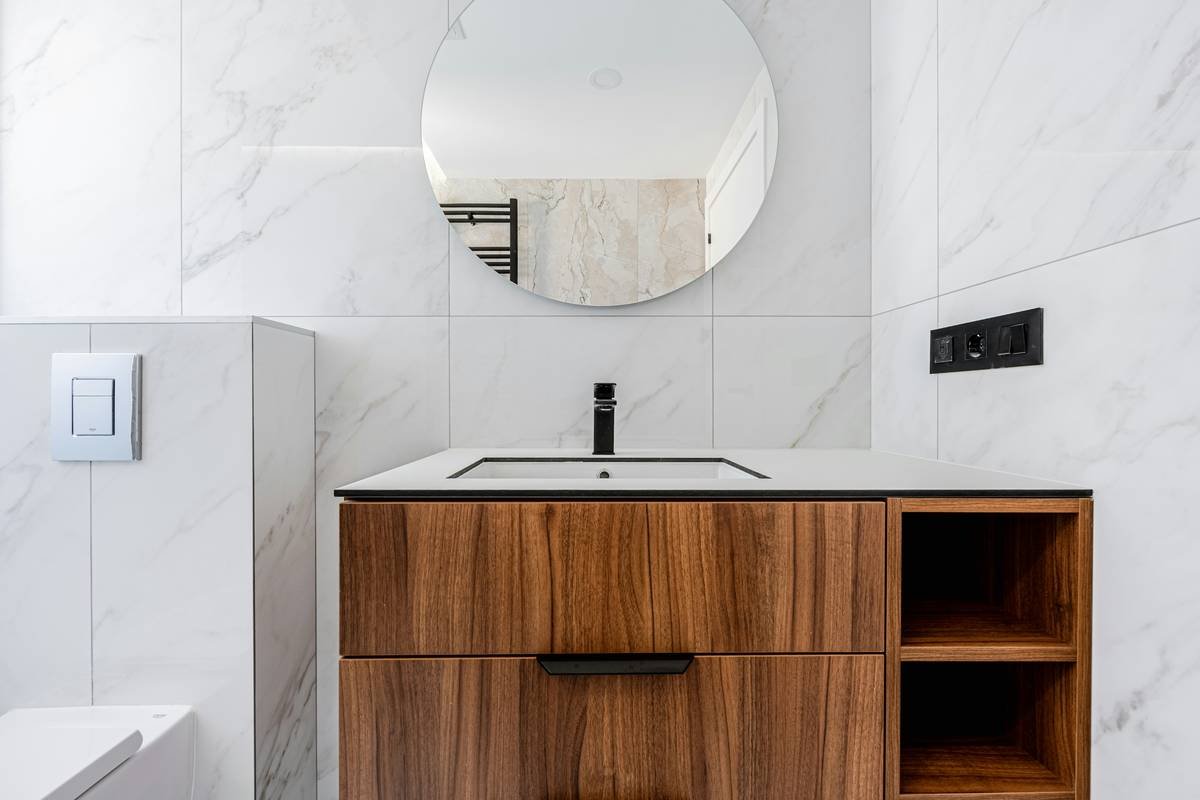
Ever tried applying eyeliner while balancing on a wobbly stool, your foundation bottle teetering off the edge of your nightstand? Yeah. Me too—last Tuesday, actually. (Spoiler: I spilled liquid pigment on my white duvet. Again.) If you’re nodding along while eyeing that 3-foot gap between your bed and closet like it’s Narnia for beauty tools, you need a compact vanity. Not just any dainty desk—but a thoughtfully engineered, clutter-taming, mood-lifting command center that fits where nothing else can.
In this guide, you’ll discover why a compact vanity isn’t just furniture—it’s a game-changer for skincare rituals and makeup mastery in tight spaces. We’ll break down what makes one truly functional (vs. just cute), how to choose the right size and storage for your routine, real setups that work in under 4 sq ft, and even which “space-saving” hacks are total junk. Let’s turn your cramped corner into a glow-up zone.
Table of Contents
- Why Compact Vanities Matter (Especially Now)
- How to Choose the Perfect Compact Vanity
- 5 Non-Negotiable Tips for Maximizing a Compact Vanity
- Real-Life Compact Vanity Setups That Work
- Compact Vanity FAQs
Key Takeaways
- A true compact vanity measures ≤36″ wide and integrates smart storage without sacrificing surface usability.
- Mirror lighting, drawer depth, and ergonomics matter more than aesthetics—function drives consistency.
- Avoid “vanity desks” that double as office workstations; they dilute your beauty ritual’s focus.
- Modular add-ons (like wall-mounted shelves or pull-out trays) beat built-in organizers that can’t adapt.
- According to a 2023 Houzz Home Study, 68% of U.S. homeowners cite “dedicated beauty zones” as a top bathroom or bedroom upgrade priority.
Why Compact Vanities Matter (Especially Now)
Let’s be real: the dream of a sun-drenched, marble-topped Hollywood vanity with 20 rotating stools died sometime around 2019 rent hikes. Today, 52% of urban renters live in studios or 1-bedroom units under 700 sq ft (U.S. Census Bureau, 2022). And yet—our beauty routines have only gotten more elaborate. Skincare layers, multi-step color correction, LED masks… we’re not just “putting on mascara.” We’re curating self-care experiences.
Without a dedicated spot? Products scatter. Brushes collect dust. That $85 serum gets shoved behind laundry detergent. A compact vanity solves this by creating a ritual anchor—a physical cue that says, “This is your time.” Psychologically, designated spaces boost adherence to routines (Journal of Environmental Psychology, 2021). Translation: you’ll actually use your fancy tools if they’re visible, accessible, and not sharing shelf space with your laptop charger.
How to Choose the Perfect Compact Vanity
What width actually qualifies as “compact”?
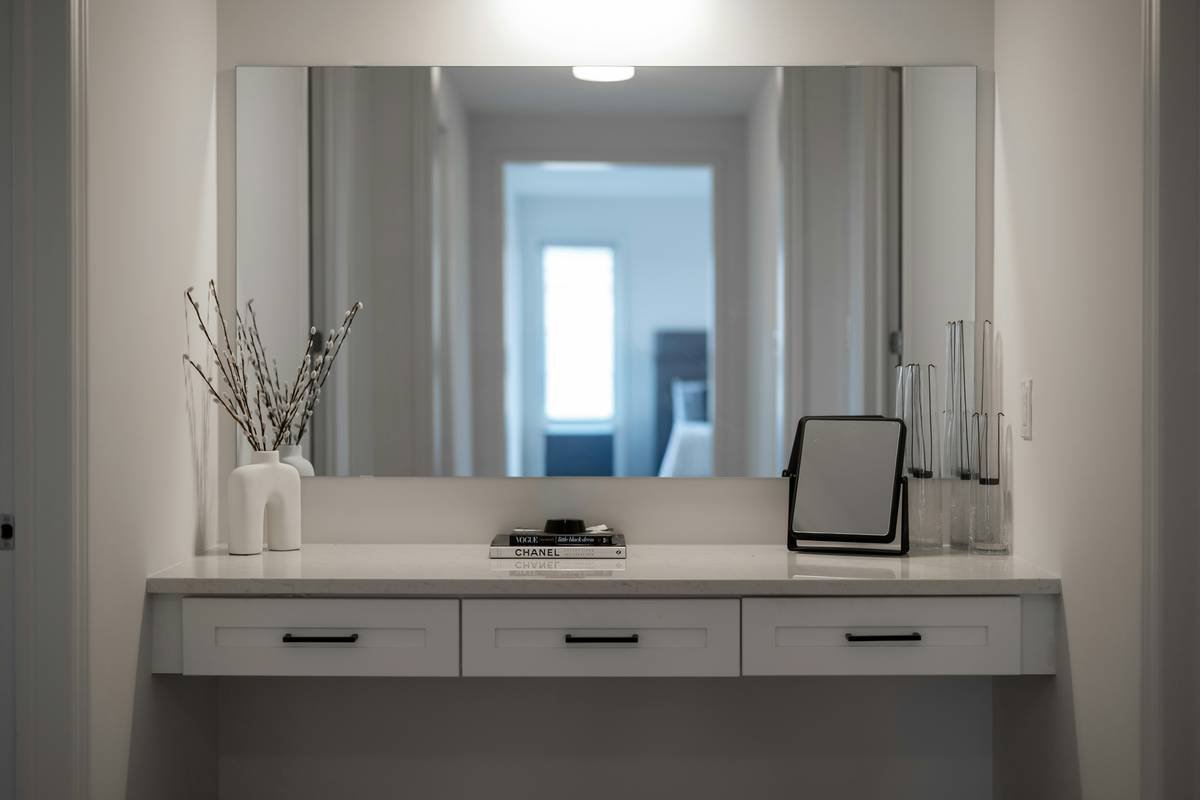
Industry standard? Anything ≤36 inches wide. But don’t just measure your wall—measure your elbows. Sit at a table now. Spread your arms slightly. Can both forearms rest comfortably without bumping walls or furniture? That’s your minimum surface depth: aim for 18–22 inches.
Optimist You:
“Pick drawers with soft-close hinges and felt-lined interiors—they protect delicate compacts and feel luxurious!”
Grumpy You:
“Ugh, fine—but only if coffee’s involved. And skip those ‘jewelry trays’ glued inside drawers. They’re impossible to clean and trap glitter forever.”
Lighting isn’t optional—it’s diagnostic
Your ring light shouldn’t be an afterthought. Look for vanities with daylight-balanced LEDs (5000K–6500K) built into the mirror frame. Why? According to dermatologists at the American Academy of Dermatology, cool-white lighting reveals true skin texture and undertones—critical for concealer matching and spotting early irritation. Avoid warm-yellow bulbs (under 3000K); they flatter but lie.
The “terrible tip” disclaimer
DO NOT buy a folding or wall-mounted “vanity” that requires assembly every time you use it. I tested one last winter—spent more time screwing in brackets than blending eyeshadow. Consistency dies when setup friction exists. If it’s not ready to go in 2 seconds, it’s decorative, not functional.
5 Non-Negotiable Tips for Maximizing a Compact Vanity
- Go vertical, not horizontal: Mount acrylic shelves above your mirror for serums and mists. Keeps essentials visible without crowding your workspace.
- Use drawer dividers—but make them removable: IKEA SKUBB boxes cut to size > fixed plastic inserts. Swap layouts monthly as your routine evolves.
- Hide cords in style: Run hair tool cords through a hollow leg or use adhesive cable clips underneath. Tangled cords = instant visual chaos.
- Choose matte finishes over gloss: Fingerprints and smudges vanish on textured surfaces. Pro tip: Wipe with microfiber + distilled water—never alcohol-based cleaners (they degrade sealants).
- Dedicate one drawer to “skin prep” only: Cleanser, toner, moisturizer, SPF. Keeps your AM routine streamlined and products from migrating into makeup territory.
Real-Life Compact Vanity Setups That Work
Case Study #1: The Studio Apartment Savior (NYC, 420 sq ft)
Sarah, a freelance makeup artist, replaced her IKEA LACK side table with a 30” white oak compact vanity (with pull-out keyboard tray repurposed for brushes). She added peel-and-stick LED strips under the shelf for ambient fill light. Result? Her TikTok tutorials gained 12K followers in 3 months—thanks to consistent, well-lit B-roll footage shot right at her vanity.
Case Study #2: The Dorm Room Glow-Up (Austin, TX)
College student Mia used a 28” mirrored compact vanity from Target ($129) but upgraded the mirror to a magnifying, dimmable version from SimpleHuman. She installed over-door organizers for sheet masks and cotton pads. “My roommates stopped borrowing my products because everything has a home,” she says. “And I finally stopped losing my eyebrow pencil.”
Compact Vanity FAQs
Can I use a compact vanity in a bathroom?
Only if humidity levels stay below 60%. Wood veneers warp in steam-heavy environments. Opt for powder-coated metal or sealed bamboo if placing near a shower.
Do compact vanities come with outlets?
Most don’t—but many modern models include USB ports or hidden power strips. Always check specs. If not, run an extension cord through a leg channel (safely!) and plug into a GFCI outlet.
How much should I spend?
Quality starts at $150. Under $100? You’ll get particleboard that swells with moisture and drawers that jam after two months. Invest in solid wood frames or steel construction—they last 5+ years.
Are wall-mounted vanities better for small spaces?
Only if you lack floor space entirely. Freestanding models offer better stability for leaning forward during precise tasks (like winged liner). Wall-mounted units often wobble under pressure.
Conclusion
A compact vanity isn’t about shrinking your routine—it’s about elevating it within your reality. Whether you’ve got 2 feet beside your bed or a sliver of hallway nook, the right setup transforms rushed touch-ups into intentional moments of care. Remember: prioritize ergonomics over Instagrammability, lighting over lace trim, and modularity over “one-size-fits-all” organizers. Your skin—and sanity—will thank you.
Oh, and that duvet stain? Dry-cleaned. But the lesson stuck: never let your beauty ritual live on a nightstand again.
Like a flip phone in 2004, some things deserve a comeback—with better engineering.