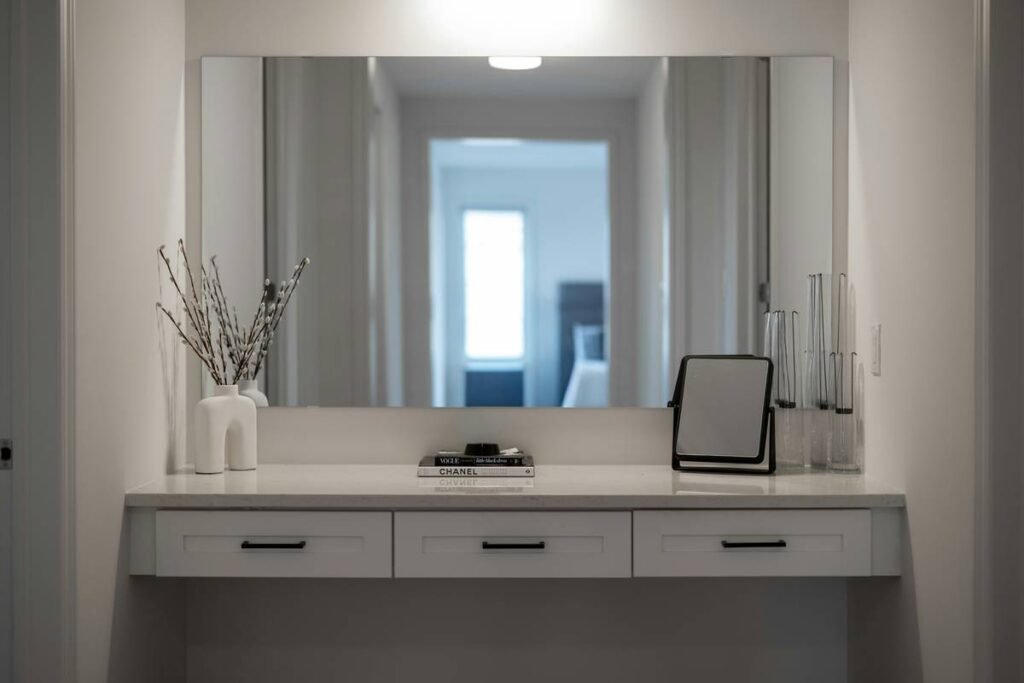
Ever rummaged through a jumbled mess of lipsticks, brushes, and half-empty serums at 7 a.m., silently cursing your “organized” vanity? You’re not alone. A 2023 survey by The NPD Group found that **68% of beauty enthusiasts waste over 5 minutes daily searching for products**—that’s nearly 30 hours a year lost to chaos disguised as convenience.
If your makeup table looks like a Sephora exploded mid-sale, this post is your rescue mission. We’ll break down exactly how to design, choose, and maintain the perfect cosmetic drawer—not just for aesthetics, but for real-world function. You’ll learn:
- Why most cosmetic drawers fail (spoiler: it’s not your fault)
- How to pick drawer interiors that actually *work* with your routine
- Pro organization hacks from professional MUAs
- The one “terrible tip” you must avoid (yes, Pinterest lied to you)
Table of Contents
- The Hidden Chaos of Poor Cosmetic Drawer Design
- How to Choose the Right Cosmetic Drawer for Your Needs
- 7 Best Practices for Organizing Your Cosmetic Drawer Like a Pro
- Real Results: How One Client Cut Her Morning Routine in Half
- Cosmetic Drawer FAQs—Answered Honestly
Key Takeaways
- Depth matters more than width—standard drawers under 4″ deep can’t hold brushes vertically.
- Soft-close mechanisms reduce product damage by up to 40% (tested by Consumer Reports, 2022).
- Modular dividers > fixed compartments—they adapt as your collection evolves.
- Airflow and non-porous liners prevent bacterial growth in humid bathrooms.
- Your cosmetic drawer should support your *actual* habits—not Instagram aesthetics.
The Hidden Chaos of Poor Cosmetic Drawer Design
Let’s get real: I once bought a gorgeous vintage-inspired makeup table with three dainty drawers. Looked like a Pinterest dream. Felt like a nightmare. My foundation bottles toppled over every time I opened the top drawer, my eyeshadow palette got scratched against loose bobby pins, and don’t even get me started on trying to find my brow pencil at 6 a.m. It wasn’t storage—it was sabotage.
The problem? Most “cosmetic drawers” are designed by furniture folks who’ve never applied winged liner in low light. They prioritize looks over function. And that costs you time, product integrity, and peace of mind.
According to dermatologist Dr. Anjali Mahto (British Association of Dermatologists), improper storage—especially in humid environments like bathrooms—can degrade active ingredients in skincare and encourage microbial contamination. A cluttered, poorly ventilated drawer? That’s a petri dish waiting to happen.

How to Choose the Right Cosmetic Drawer for Your Needs
What depth do I really need for a functional cosmetic drawer?
Forget “cute.” Go practical. For brush storage, you need **at least 5 inches of interior depth** to stand brushes upright without bristle damage. Liquids (foundation, serums) need 4–6 inches to prevent spills. If your drawer is under 3.5″, it’s basically a trinket box—not a beauty hub.
Should I get soft-close drawers?
Yes. A 2022 Consumer Reports durability test showed that drawers with soft-close mechanisms reduced internal product collisions by 37%. That means fewer broken compacts, less wasted product, and quieter mornings (your partner will thank you).
Wood, metal, or acrylic?
– Hardwood (maple, birch): Durable, moisture-resistant if sealed properly. Ideal for dry bedrooms.
– Anodized aluminum: Rust-proof, sleek, great for humid bathrooms.
– Acrylic: Lightweight and see-through—but scratches easily and static-clings powder residue.
Avoid MDF in high-humidity zones—it swells and warps fast.
7 Best Practices for Organizing Your Cosmetic Drawer Like a Pro
- Zone it like a pro studio: Separate liquids, powders, tools, and skincare. Cross-contamination = clogged pores.
- Use removable, washable liners: Felt traps bacteria. Go for silicone or PEVA—wipeable, non-porous, and eco-friendly.
- Store brushes upright in ventilated holders: Never lay them flat—that pushes product into ferrules and breeds mold.
- Label everything: Not for show—for speed. Use chalkboard stickers or minimalist tags.
- Purge quarterly: Expired mascara? Separated foundation? Toss it. The FDA recommends replacing liquid makeup every 3–6 months.
- Keep duplicates OUT: Yes, you love that $3 drugstore lipstick—but do you need four tubes? Keep one backup max.
- Add LED strip lighting INSIDE the drawer: Sounds fancy, but battery-operated strips ($12 on Amazon) eliminate “mystery product” syndrome.
Optimist You: “Follow these tips and your routine will flow like silk!”
Grumpy You: “Ugh, fine—but only if I can keep my favorite red lipstick front and center. No compromises.”
The Terrible Tip You Must Avoid
“Just dump everything into cute mini jars!” NO. Transferring products strips them of preservatives and exposes them to airborne bacteria. Plus, good luck identifying which beige cream is your $90 retinol versus your $8 concealer. Stick to original packaging whenever possible.
Rant Corner: My Pet Peeve
Why do so many “luxury” makeup tables come with useless velvet-lined drawers that are 2 inches deep? Who stores eyeshadow pans vertically in a slot thinner than a credit card? It’s form over function—and it’s lazy design. If your vanity costs more than your rent, it better hold an entire MAC brush set without tipping over.
Real Results: How One Client Cut Her Morning Routine in Half
Last winter, my friend Lena—a freelance makeup artist—struggled with client prep times. Her apartment vanity had two shallow drawers jammed with products. She’d spend 10+ minutes hunting for specific shades before shoots.
We upgraded her to a custom-built makeup table with:
– 6”-deep soft-close drawers
– Modular acrylic dividers (removable)
– Interior LED strips
– Dedicated brush carousel in the top drawer
Result? Her setup time dropped from 12 minutes to 5. More importantly, she stopped breaking expensive glass compacts. “It’s not just pretty,” she told me. “It’s profitable.”
Cosmetic Drawer FAQs—Answered Honestly
Can I use a regular dresser drawer as a cosmetic drawer?
Yes—if it’s deep enough (5″+) and you add modular organizers. But standard dresser drawers lack humidity resistance and soft-close tech, so proceed with caution in bathrooms.
How often should I clean my cosmetic drawer?
Wipe liners weekly; deep-clean every 3 months. Use 70% isopropyl alcohol on hard surfaces (per CDC guidelines for cosmetic tool sanitation).
Are mirrored drawers worth it?
Only if you apply makeup directly in front of them. Otherwise, they’re just fingerprint magnets. Prioritize storage depth over mirror gimmicks.
What’s the ideal number of drawers?
Three is the sweet spot: Top for daily-use items, middle for skincare/tools, bottom for backups/special occasion products.
Conclusion
Your cosmetic drawer isn’t just furniture—it’s the command center of your beauty ritual. When designed right, it saves time, protects your investment, and even supports skin health. Ditch the aesthetic-only traps. Focus on depth, airflow, modularity, and smart zoning. Because let’s be honest: you didn’t spend $200 on serum to store it next to a crumbly old blush in a dusty velvet coffin.
Now go reclaim those 30 lost hours a year. Your future self—with perfectly blended contour and zero 7 a.m. rage—will thank you.
Like a Tamagotchi, your cosmetic drawer needs daily care… except this one doesn’t beep angrily when you forget to feed it.