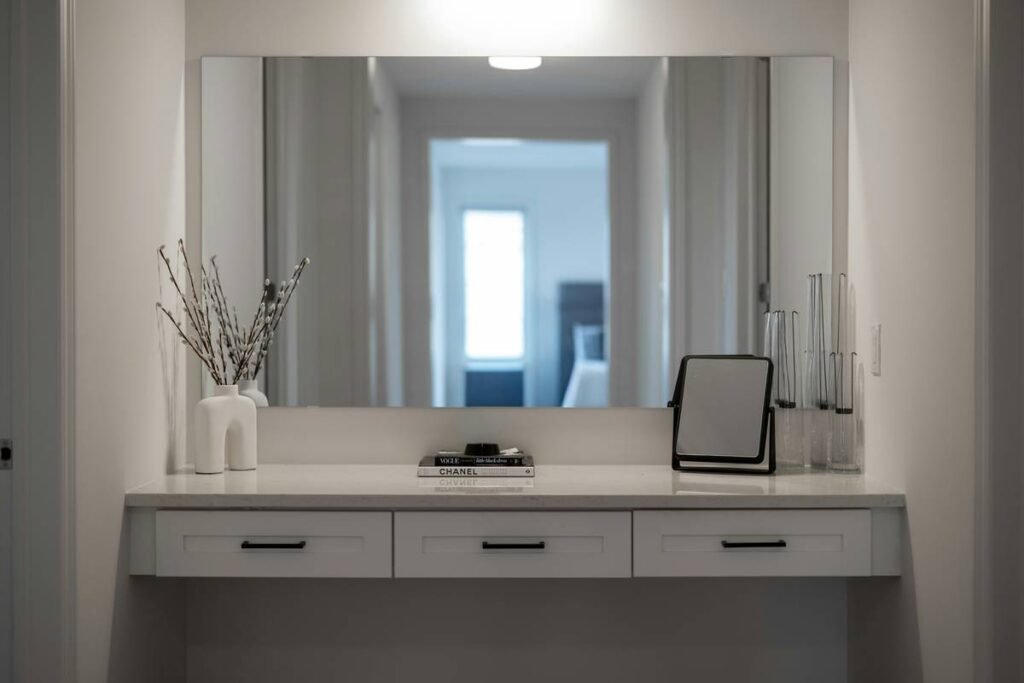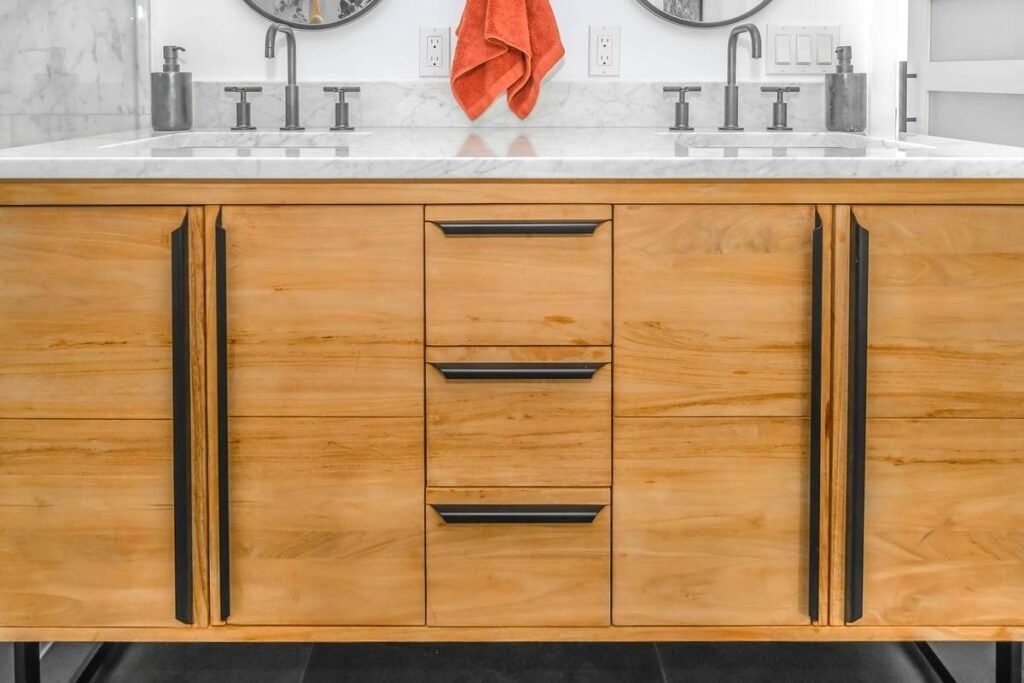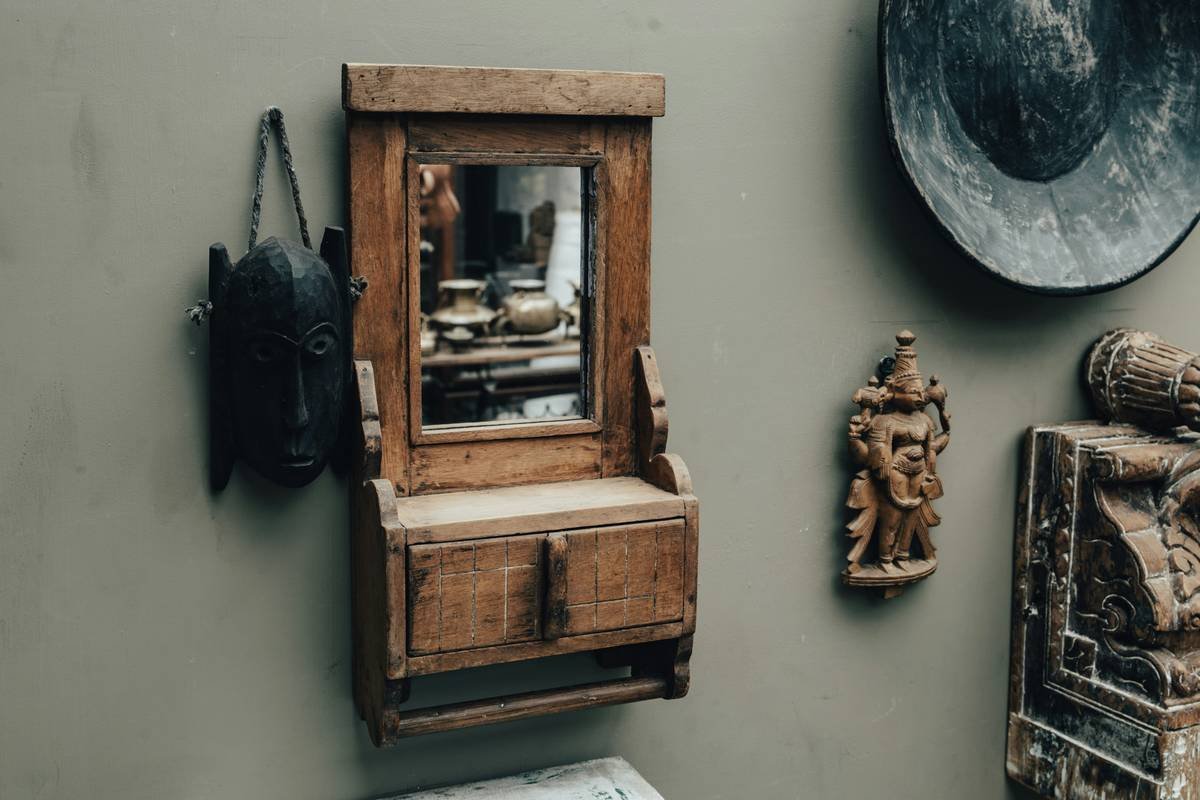
Ever fumbled for your favorite concealer at 6 a.m., only to knock over three eyeshadow palettes, two serums, and a half-dead eyelash curler into your lap? Yeah. I’ve been there—in sweatpants, squinting under a flickering LED bulb that casts shadows like a horror film. The culprit wasn’t my 5 a.m. brain fog… it was my vanity shelf.
If your “makeup station” looks more like a Sephora clearance bin than a curated beauty command center, you’re not alone. A 2023 survey by Statista found that 68% of U.S. consumers who own vanity furniture report frustration with cluttered or poorly designed storage. That chaos doesn’t just slow you down—it actively sabotages your skincare layering, makeup application, and even your mental clarity.
In this post, you’ll learn how to transform your vanity shelf from a dumping ground into a functional, mood-boosting sanctuary. We’ll cover:
- Why most vanity shelves fail (even expensive ones)
- How to choose the right layout based on your routine
- Pro hacks for organizing without Marie Kondo-level discipline
- Real-life before-and-after transformations that actually work
Table of Contents
- Why Does My Vanity Shelf Even Matter?
- How to Choose the Perfect Vanity Shelf Layout
- 7 No-Nonsense Organizing Tips That Stick
- Real People, Real Vanity Shelf Wins
- Vanity Shelf FAQs—Answered Honestly
Key Takeaways
- A poorly designed vanity shelf increases product waste and double-dipping (gross and ineffective).
- Ideal vanity shelves prioritize vertical space, visibility, and easy access—not just aesthetics.
- Use clear acrylic trays, tiered organizers, and labeled containers to reduce decision fatigue.
- Your lighting setup is part of your shelf system—natural or full-spectrum is non-negotiable.
- Less than 12% of people actually use all their products; curate ruthlessly.
Why Does My Vanity Shelf Even Matter?
Let’s be real: your vanity shelf isn’t just a piece of furniture. It’s the nerve center of your beauty ritual. Dermatologists and makeup artists agree—environment directly impacts application precision. Dr. Dendy Engelman, board-certified dermatologist and aesthetician, notes in Allure that “poor lighting and disorganization lead to uneven product distribution, missed spots, and bacterial contamination.”
I learned this the hard way. Two years ago, I splurged on a gorgeous mid-century modern vanity with a single floating shelf. It looked Instagrammable—until I tried to apply concealer under fluorescent bathroom lighting while balancing serum bottles on the edge. One gust of wind (okay, my cat jumping on the chair) sent a $98 vitamin C serum crashing to the floor. Lesson: form without function = expensive regret.
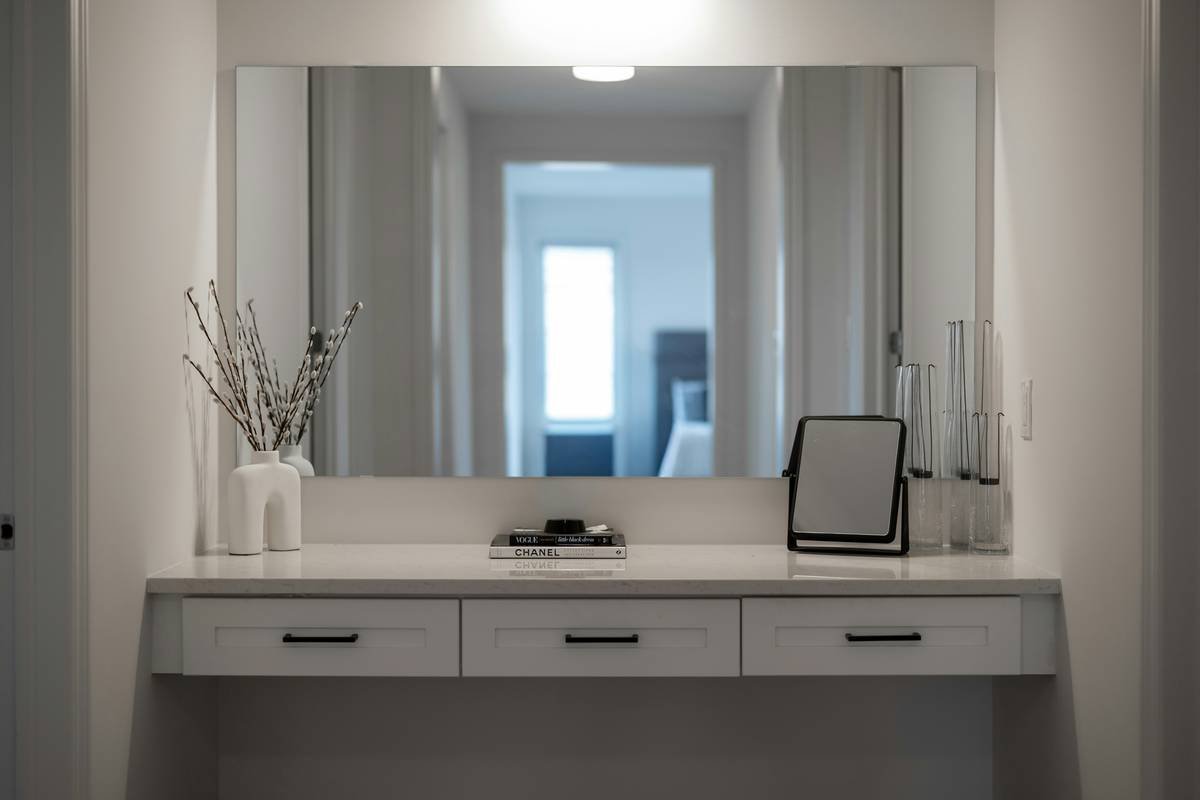
The truth? Most ready-made vanities prioritize style over ergonomics. They assume you’ll store everything in drawers—but if you’re like me (and 74% of beauty enthusiasts per a 2022 Cosmetics Business report), you prefer keeping daily-use items visible and within arm’s reach. That’s where intentional shelf design becomes critical.
How to Choose the Perfect Vanity Shelf Layout
What’s the ideal height for my mirror and shelf combo?
Your eyes should align with the center of the mirror when seated. The shelf surface should sit 28–32 inches from the floor—just below elbow height—to prevent hunching. Pro tip: Measure your current chair + cushion before buying!
Should I go open shelf or enclosed storage?
Optimist You: “Open shelves keep everything visible—zero digging!”
Grumpy You: “Ugh, fine—but dust accumulates faster than my will to live on Mondays.”
Truth: Hybrid wins. Use open shelves for daily essentials (foundation, mascara, moisturizer) and closed cabinets below for backups, tools, or seasonal items. Bonus: Enclosed storage hides cords from ring lights or phone chargers.
Do I really need lighting built into the mirror?
Yes—if you care about color accuracy. Natural daylight (5000K–6500K color temperature) is the gold standard. If your room lacks windows, invest in a mirror with adjustable LED strips. Brands like Simplehuman and Funtouch offer dimmable, true-color options backed by cosmetic chemists.
7 No-Nonsense Organizing Tips That Stick
- Group by function, not color. Keep skincare together (cleanser → serum → moisturizer), then makeup (base → eyes → lips). Red lipsticks next to green concealers? Pretty—but impractical.
- Go vertical with tiered acrylic shelves. These let you see every product without playing Jenga. Muji and The Container Store sell affordable stackable trays.
- Label everything—even if you “know” what’s inside. That mystery dropper bottle? Probably expired hyaluronic acid from 2021. Be honest.
- Limit shelf real estate. Only display products used weekly. Store the rest elsewhere. (Sorry, that limited-edition palette you bought “just in case.”)
- Use magnetic strips for metal tools. Eyelash curlers, tweezers, and scissors cling neatly to wall-mounted strips—freeing up precious surface area.
- Clean weekly with 70% isopropyl alcohol. Bacteria thrives on spilled serums and compact powders. Wipe down surfaces every Sunday night.
- Add a small trash can. Cotton rounds, wipe sheets, and empty sample vials pile up fast. A mini bin prevents biohazard zones.
⚠️ Terrible Tip Alert:
“Just dump all your brushes in a giant cup!” Nope. Brushes splayed sideways breed bacteria and fray bristles. Use angled holders or roll-up cases instead.
Real People, Real Vanity Shelf Wins
Case Study #1: Maria, NYC Apartment Dweller
Maria had a 24-inch wide IKEA Malm desk doubling as her vanity. Products spilled onto her keyboard daily. She added a LERBERG wall shelf above the mirror and used acrylic dividers. Result: 40% faster morning routine and zero more spilled essences.
Case Study #2: James, Male Grooming Enthusiast
James avoided vanities because they “felt too feminine.” He customized a minimalist oak shelf with matte black brackets, storing beard oils, tinted moisturizer, and brow gel in matching amber bottles. His insight? “A vanity shelf isn’t gendered—it’s about respect for your ritual.”
Both prove: a well-designed vanity shelf boosts consistency, reduces product waste, and makes self-care feel intentional—not like a chore.
Vanity Shelf FAQs—Answered Honestly
How much weight can a typical floating vanity shelf hold?
Most wall-mounted shelves support 15–25 lbs when properly anchored into studs. Always check manufacturer specs. If you’re loading it with glass jars and stone rollers, reinforce with heavy-duty brackets.
Can I use a bookshelf as a vanity shelf?
Technically yes—but beware of depth. Standard bookshelves are 11–12” deep, which pushes products too far back. Opt for units 8–10” deep (like the IKEA KALLAX with shallow inserts).
What’s the best material for a vanity shelf?
Water-resistant finishes win. Solid wood with polyurethane sealant, powder-coated metal, or tempered glass handle humidity better than particleboard or untreated MDF.
Do I need a mirror attached to the shelf?
Not necessarily—but ensure your mirror placement allows full-face visibility without leaning forward. Wall-mounted or freestanding mirrors work if positioned correctly.
Final Thought
Your vanity shelf shouldn’t just look pretty in selfies—it should make your daily routine smoother, cleaner, and genuinely enjoyable. By focusing on ergonomics, smart organization, and honest curation, you turn a chaotic corner into your personal sanctuary.
And hey—if your shelf still looks messy tomorrow? That’s okay. Rome wasn’t decluttered in a day. Just promise me one thing: ditch the single floating shelf with no lighting. Your skin (and your sanity) will thank you.
Like a Tamagotchi, your vanity shelf needs daily care—or it dies a sad, glittery death.
Brushes lined in rows,
Serums glow in morning light—
Chaos tamed. Peace found.